


Frequently Asked Questions About Industrial Brushes and Brooms

Common Questions about Industrial Floor Cleaner Brushes and Brooms
Choosing the right industrial floor brushes and brooms directly impacts your facility’s cleanliness and your equipment's lifespan. Sweeping a warehouse floor requires a completely different approach than scrubbing a commercial showroom. Using the wrong brush material can wear down your machine prematurely or leave stubborn grime behind. This guide breaks down the core differences between polypropylene, nylon, and wire bristle filaments so you can pick the exact setup your floor scrubber or sweeper needs.
What's the difference between a brush and a broom?
In industrial floor cleaning terms, brushes are used in floor scrubbers, brooms are used in sweepers.
What's the difference between a sweeper and a scrubber?
A sweeper is an industrial vacuum cleaner that is used to clean floors of dust and debris. It is ideal for cleaning warehouses and manufacturing plants that produce a lot of dust. A sweeper may be the best choice when dealing with light, bulky, heavy, or wet debris.
On the other hand, a scrubber relies on scrubbing pads to loosen grit and grime and remove them from the floor. It is ideal for cleaning fine dust or dirt like what is brought in by foot traffic, floor marks, or grease. Scrubbers operate with water and cleaning chemicals and are more labor-intensive than sweepers.
So, sweepers are best suited for cleaning large debris while scrubbers are ideal for cleaning fine dust or dirt.
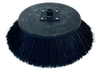
What kinds of brushes and brooms are there?
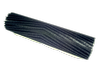
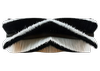
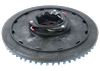
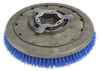
There are several types of brushes available for industrial sweepers and floor scrubbers. The most common types of brushes are:
1. Side broom: A side broom pushes debris in front of your sweeper for the main broom to pick up.
2. Main broom: The main broom is built around a heavy-duty core, with staple-set tufts aligned in spiral rows. This design always keeps bristles on the floor. It increases the efficiency of your vacuum and improves pickup.
3. Rotary brush or “side scrubber”: A rotary brush or ‘side scrub; is designed to spin and loosen debris from the ground. It has dense, stiff bristles.
4. Cylindrical: A cylindrical scrubber always keeps the bristles on the floor, moving cleaning solution to the center of the scrubbing path and loosens debris from the ground.
5. Pad driver or pad drive board: The pad driver is set with stiff 1/2” long polypropylene bristles. They are trimmed unevenly and widely spaced to give them a firm grip on floor pads.
The materials used for brush bristles include nylon and polypropylene. Nylon has an excellent brush lifespan when used for sweeping in dry conditions, performs well on rough surfaces and in high-temperature environments because of its durability and high melting point. Poly brushes are amongst the most popular, mainly due to their affordability.
(references: bing, tvh.com, thesweeper.com, scrubbershop.com, www.mhwmag.com.)
Material Comparison
| Material | Aggressiveness | Best Application | Key Benefit |
|---|---|---|---|
| Nylon | Medium | Rough surfaces, high-temperature soils | Longest brush life |
| Polypropylene | Medium | All-purpose warehouse floors | Wet or dry conditions |
| Natural Fiber & Wire | Medium to High | Dry, dusty floors with compacted dirt | Better dust control |
| Bristle & Wire | High | Compacted dirt and dried mud | Light cutting action |
| Crinkle Wire | Most Aggressive | Heavy compacted soils | Maximum scraping power; no dust control |
Disk (scrubbing) vs Cylindrical (sweeping)
- Disk Systems: Best for flat, smooth floors where high down-pressure is required to remove scuffs and grime.
- Cylindrical Systems: Better for facilities with small debris (like wood chips or metal shavings) because they sweep debris into a tray while scrubbing simultaneously, eliminating the need to pre-sweep.
When should I replace my scrubbers brushes and brooms?
We recommend replacing brushes and brooms at least yearly, as a preventative measure, depending on how much use your floor machines receive. Keep your eyes open for signs of reduced cleaning ability as well.
How to Check Your Brushes for Wear and Tear
Regularly inspecting your sweeper and scrubber brushes prevents costly floor damage and keeps your equipment running efficiently. Overworn bristles reduce cleaning power, forcing your machine to work harder and wear out its motor prematurely.
Follow this three-step inspection routine to know exactly when it is time for a replacement:
- Measure the Bristle Length: Check the remaining filament length against the manufacturer's guidelines. As a rule of thumb, replace cylindrical or disk brushes when the bristles have worn down to one-third of their original length (typically leaving less than 1.5 inches of filament).
- Look for Flat Spots and Mats: Inspect the brush for uneven wear patterns. Bristles that are flattened, permanently bent, or matted together from grease and debris will simply slide over dirt instead of flicking it away.
- Inspect the Bristle Tips: Effective cleaning relies on the sharp, texturized ends of the bristles. If the tips appear rounded, frayed, or smoothed out by friction, the brush has lost its scrubbing aggressiveness and needs to be replaced.
When’s the best time to buy floor cleaner brushes and brooms?
Forklift of Michigan’s Brush and Broom Sale in November, of course. Save up to 40% on brushes and brooms for all makes and models of industrial floor cleaners, sweepers and scrubbers.


